
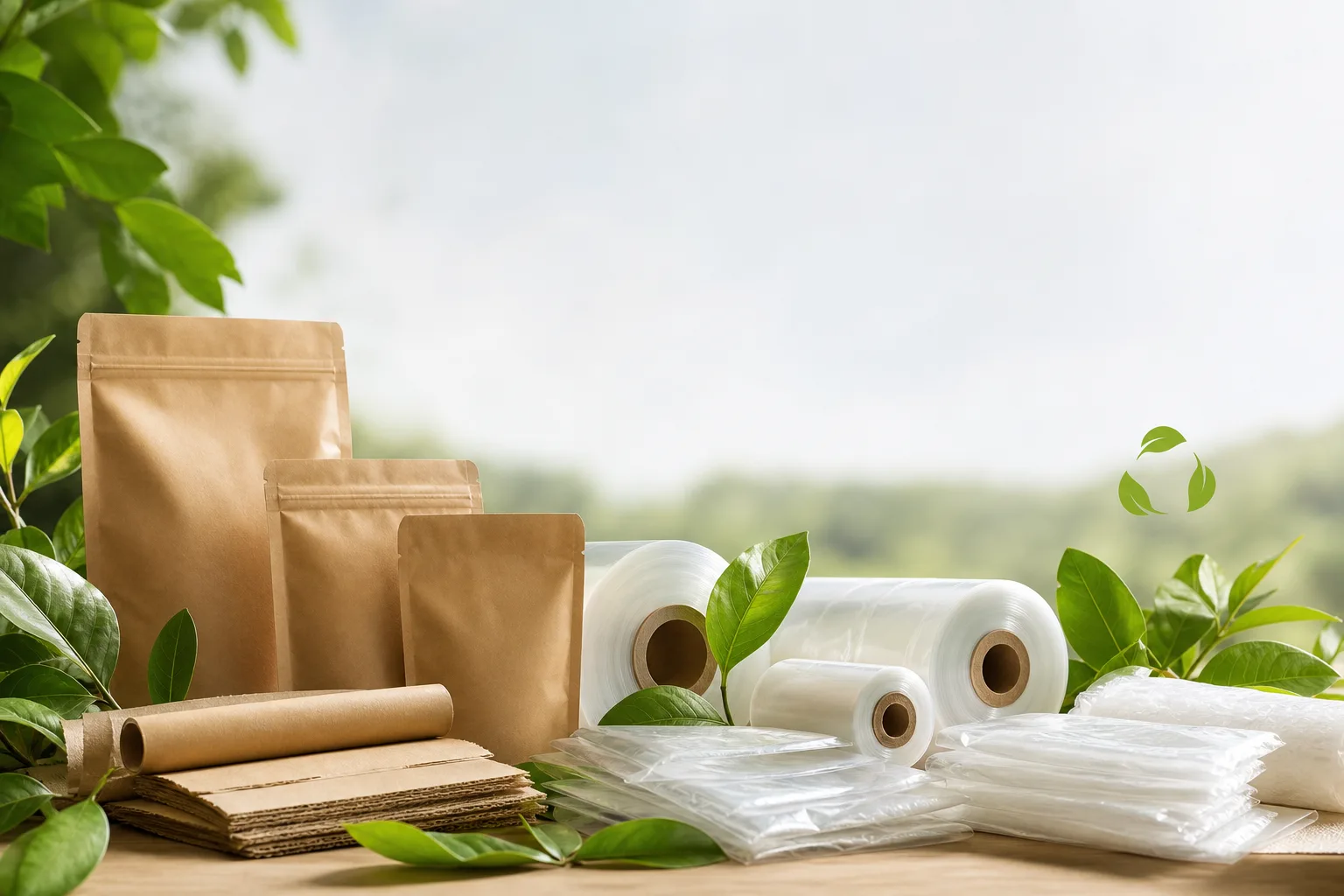
Sustainable packaging in India is no longer a “nice to have”, it is fast becoming a business and compliance requirement. Tighter plastic-waste regulation, growing buyer demand for greener products, and rising raw-material costs are pushing brands and manufacturers to rethink how they pack and ship goods. For packaging manufacturers, 2025–2026 is the window to adapt. This guide breaks down the eco-friendly packaging trends shaping the Indian market, the most realistic biodegradable plastic alternatives available today, and the practical steps manufacturers should take now to stay competitive and compliant.
Why sustainable packaging is booming in India
Three forces are driving the shift toward sustainable packaging in India:
- Regulation. India’s Plastic Waste Management Rules and the Extended Producer Responsibility (EPR) framework now make producers, importers and brand owners accountable for the plastic they put on the market. Identified single-use plastic items are banned, and businesses must meet recycling and recycled-content targets.
- Buyer demand. E-commerce platforms, FMCG brands, pharmaceutical companies and exporters increasingly ask suppliers for recyclable, reusable or reduced-plastic packaging, often as a condition of doing business.
- Cost and efficiency. Lighter, smarter packaging uses less material, which lowers both material spend and freight costs while reducing environmental impact.
For manufacturers, this means eco-friendly packaging is becoming a differentiator that wins contracts, not just a compliance checkbox.
Trend 1: Biodegradable and compostable plastic alternatives
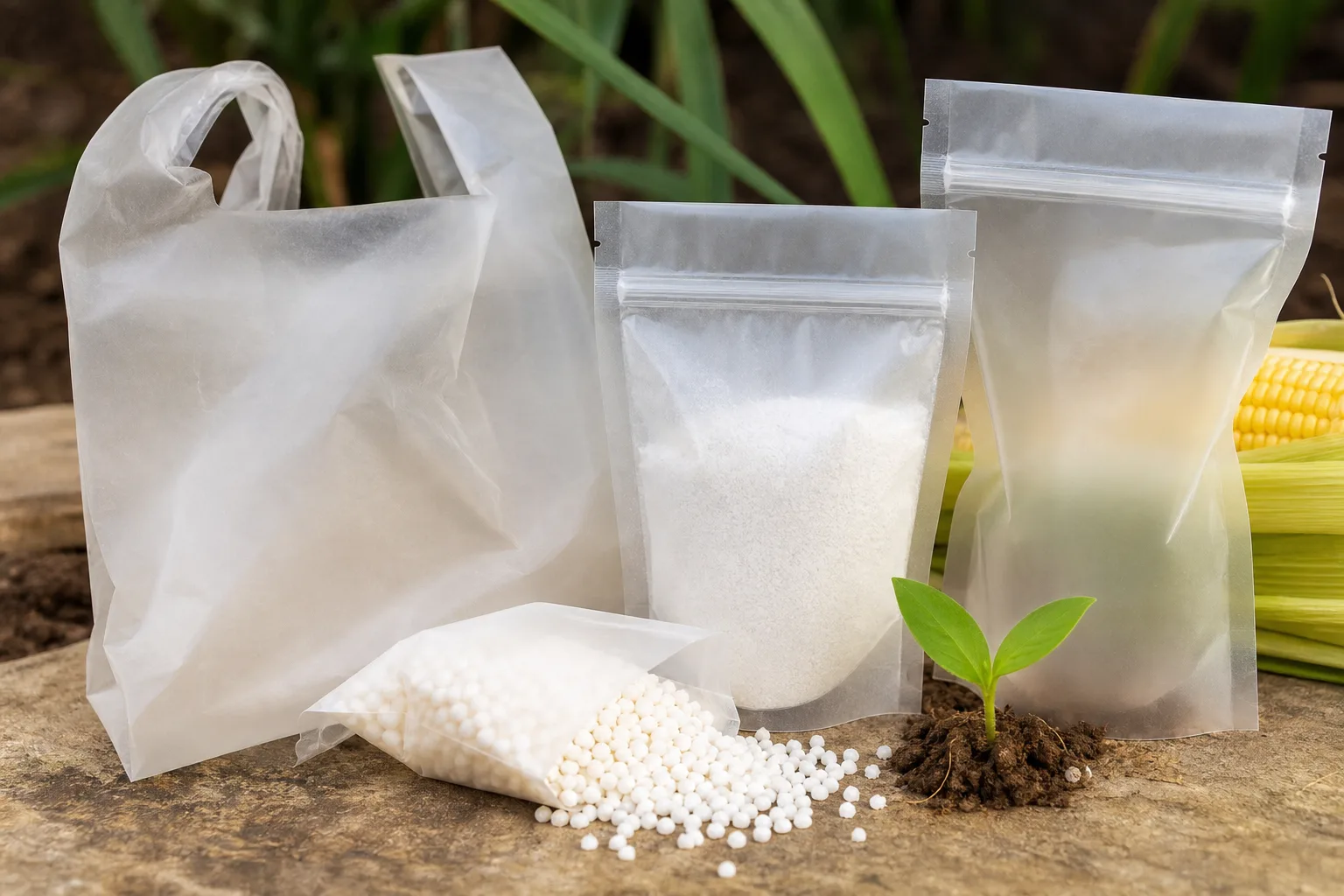
Demand for biodegradable plastic alternatives is rising quickly. The most common options in the Indian market include:
- Compostable bioplastics (PLA, PBAT blends): derived from plant starch and designed to break down in industrial composting conditions.
- Starch-based films and bags: made from corn or potato starch, suited to lightweight applications.
- Paper and kraft hybrids: increasingly used for pouches, mailers and wraps where a plastic barrier is not essential.
A realistic note for manufacturers: “biodegradable” and “compostable” are not the same, and many compostable materials only break down in industrial facilities, not home compost or landfill. Claims must be accurate and certifiable to avoid greenwashing risk. For many heavy-duty, moisture-sensitive or food-grade uses, well-designed recyclable packaging remains the more practical and scalable sustainable choice today.
Trend 2: Recyclable and mono-material design
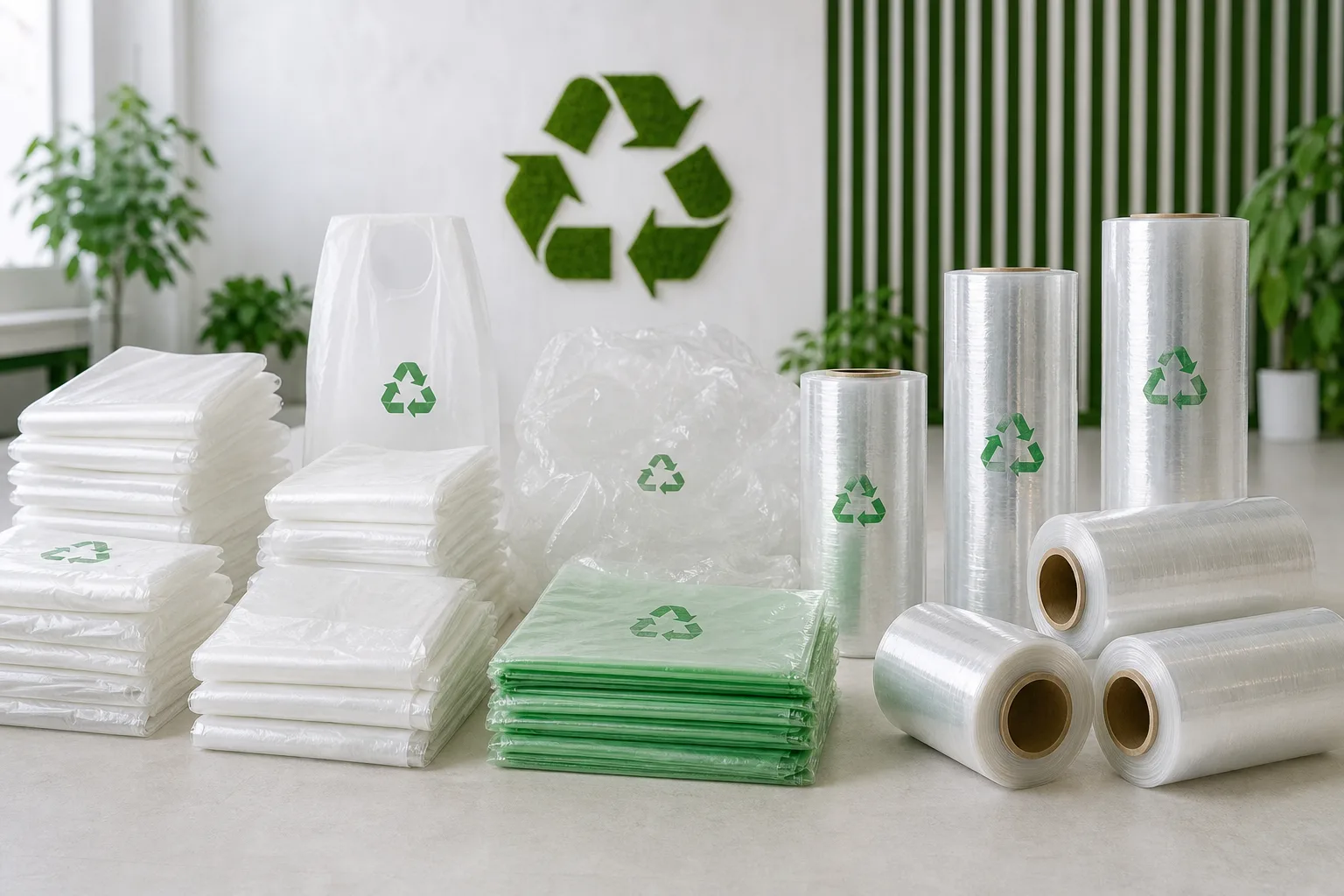
One of the biggest 2025–2026 shifts is design for recyclability. Multi-layer, mixed-material packaging is hard to recycle, so brands are moving to mono-material structures, packaging made from a single, easily recyclable polymer such as LDPE or PP.
This plays directly to manufacturers who already work with polyethylene and polypropylene. Producing recyclable LDPE bags and recyclable BOPP bags in clean, single-material formats, with clear recycling labelling, makes them far easier for customers to recover and reuse.
Trend 3: Lightweighting and material reduction
“Source reduction”, using less material to do the same job, is one of the most cost-effective sustainability moves available. Examples include:
- Thinner-gauge, high-strength stretch film that secures the same load with less plastic.
- Right-sized bags and pouches that eliminate excess material and void fill.
- Optimised film formulations that maintain strength at reduced thickness.
Lightweighting reduces plastic consumption, lowers EPR obligations and cuts logistics costs, a rare win-win-win for manufacturers and their customers.
Trend 4: Recycled content and the circular economy
Under EPR, brand owners are expected to incorporate recycled plastic content into their packaging over time. This is driving demand for packaging that includes post-consumer recycled (PCR) resin. Manufacturers who can reliably blend recycled content while maintaining quality and food-safety standards will have a clear advantage as recycled-content targets tighten.
Trend 5: Minimal, smart and paper-based hybrids
Beyond materials, design itself is getting greener: minimalist packaging with less ink and fewer components, paper-plastic hybrids for retail and e-commerce, and customised printed pouches designed for reuse or easy recycling. Smart, modern packaging that looks premium while using fewer resources is increasingly what brands want on the shelf.
What manufacturers need to do now
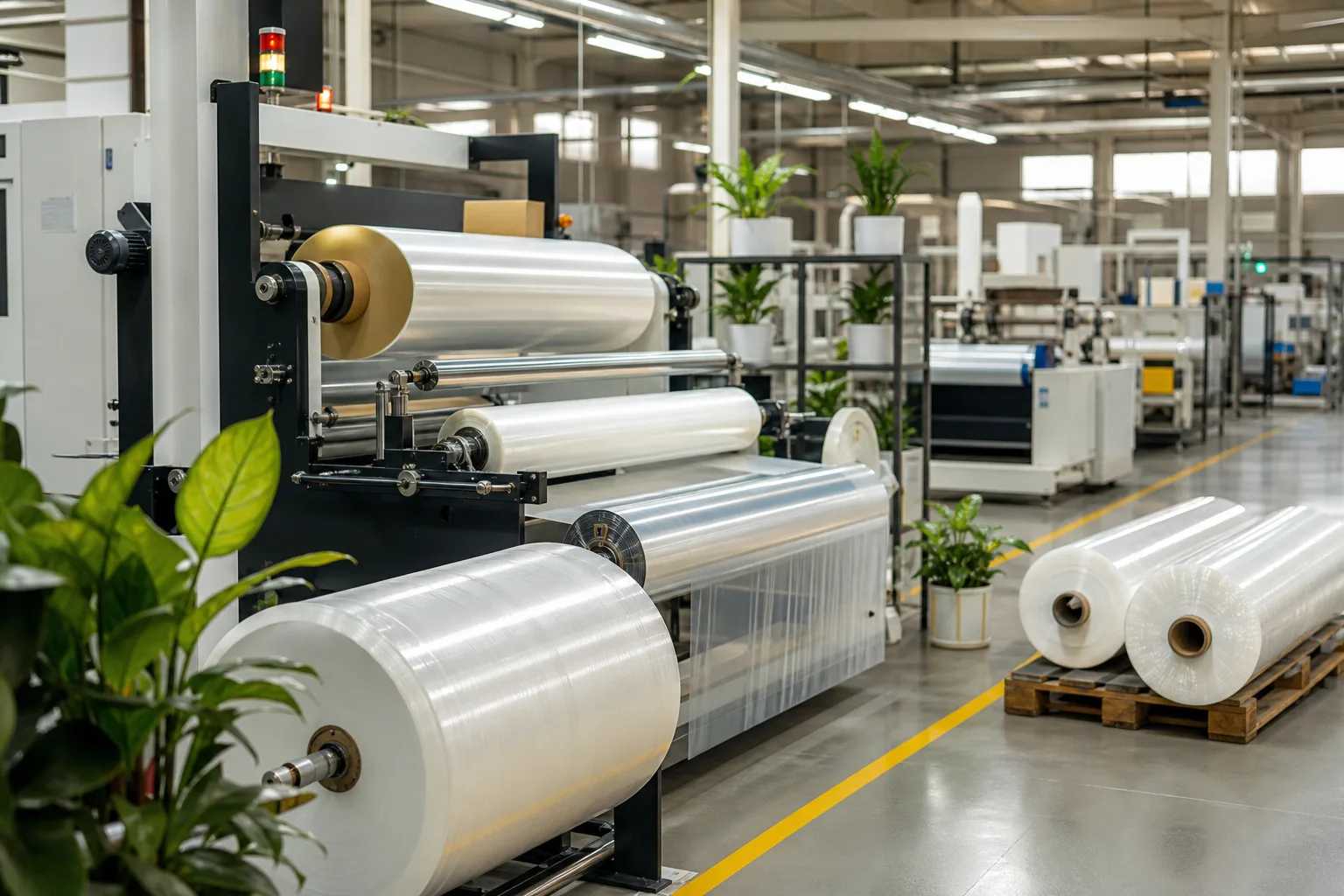
A practical 2025–2026 checklist for packaging manufacturers:
- Audit your range for recyclability and identify which products can move to mono-material designs.
- Register and stay compliant with EPR and Plastic Waste Management requirements.
- Offer recycled-content and lightweighted options to help customers meet their own targets.
- Label clearly and honestly, back every “recyclable”, “biodegradable” or “compostable” claim with evidence.
- Educate customers on the trade-offs between recyclable, biodegradable and compostable options so they choose the right material for the job.
How DP Udyog supports sustainable packaging
At DP Udyog, sustainability is built into how we manufacture. We help businesses move toward eco-friendly packaging without sacrificing durability or cost-efficiency through recyclable, customisable solutions, from recyclable LDPE bags and high-strength stretch film to BOPP bags and printed pouches. Explore our full packaging range to see how we can tailor sustainable packaging to your product, volume and branding needs.
As regulation tightens and buyers demand greener options, partnering with a manufacturer that understands sustainable packaging in India is a smart long-term move. Contact our team to discuss eco-friendly, customised packaging for your business.
Frequently Asked Questions
What is sustainable packaging?
Sustainable packaging is packaging designed to reduce environmental impact across its life cycle, through recyclable or biodegradable materials, reduced material use (lightweighting), recycled content, and responsible disposal. The goal is to protect the product while minimising waste and resource use.
What are the best biodegradable plastic alternatives in India?
Common biodegradable plastic alternatives include compostable bioplastics like PLA and PBAT blends, starch-based films and bags, and paper or kraft hybrids. The right choice depends on the application, for many heavy-duty or moisture-sensitive uses, recyclable mono-material packaging is currently more practical and scalable.
Is biodegradable packaging the same as compostable packaging?
No. “Biodegradable” means a material can break down over time, but it does not specify how long or under what conditions. “Compostable” means it breaks down into compost under defined conditions, often only in industrial composting facilities. Always check certification and disposal requirements before making claims.
How does EPR affect packaging manufacturers in India?
Under Extended Producer Responsibility (EPR) and the Plastic Waste Management Rules, producers, importers and brand owners are accountable for the plastic they introduce to the market, including recycling and recycled-content obligations. Manufacturers that offer recyclable, recycled-content and reduced-plastic options help their customers meet these requirements.
Can DP Udyog provide eco-friendly and customised packaging?
Yes. DP Udyog manufactures recyclable and customisable packaging, including LDPE bags, stretch film, BOPP bags and printed pouches, in customised sizes, thicknesses and prints to match your product and sustainability goals.